

🎾 The Invisible Problem Solvers of Tennis
What I learned during my rookie season on the ballcrew at Indian Wells

Hello Friends!
I’m Fionna, a product manager, a Federer fan, and someone staying fit and eating healthy so I can still play tennis at 90.
Every so often I share a story on what inspires me to be creative and musings that week. I’m fascinated by tech, people, design, and the idea that I can use them to reinvent myself 🧠.
You will find that I express myself through different languages, witty mEmeS and impeccable formatting. Want more content like this in your inbox?
Let this be our creative outlet.
Twitter | YouTube | Instagram | LinkedIn | Newsletter | Spotify | Buy me a 🍍

Now that the BNP Paribas Open has wrapped up, I can proudly say I’ve completed my first stint as a ballkid for a sport I’ve played and adored for over a decade—and honestly, I’m still pinching myself.
When I first started playing tennis and watching Federer dominate, I had no idea being a ballkid was even a possibility. A decade later, I still hadn’t imagined it—until last year. So I got to work. What began as a daydream eventually turned into standing on center court in the iconic uniform, living out a long-forgotten dream.
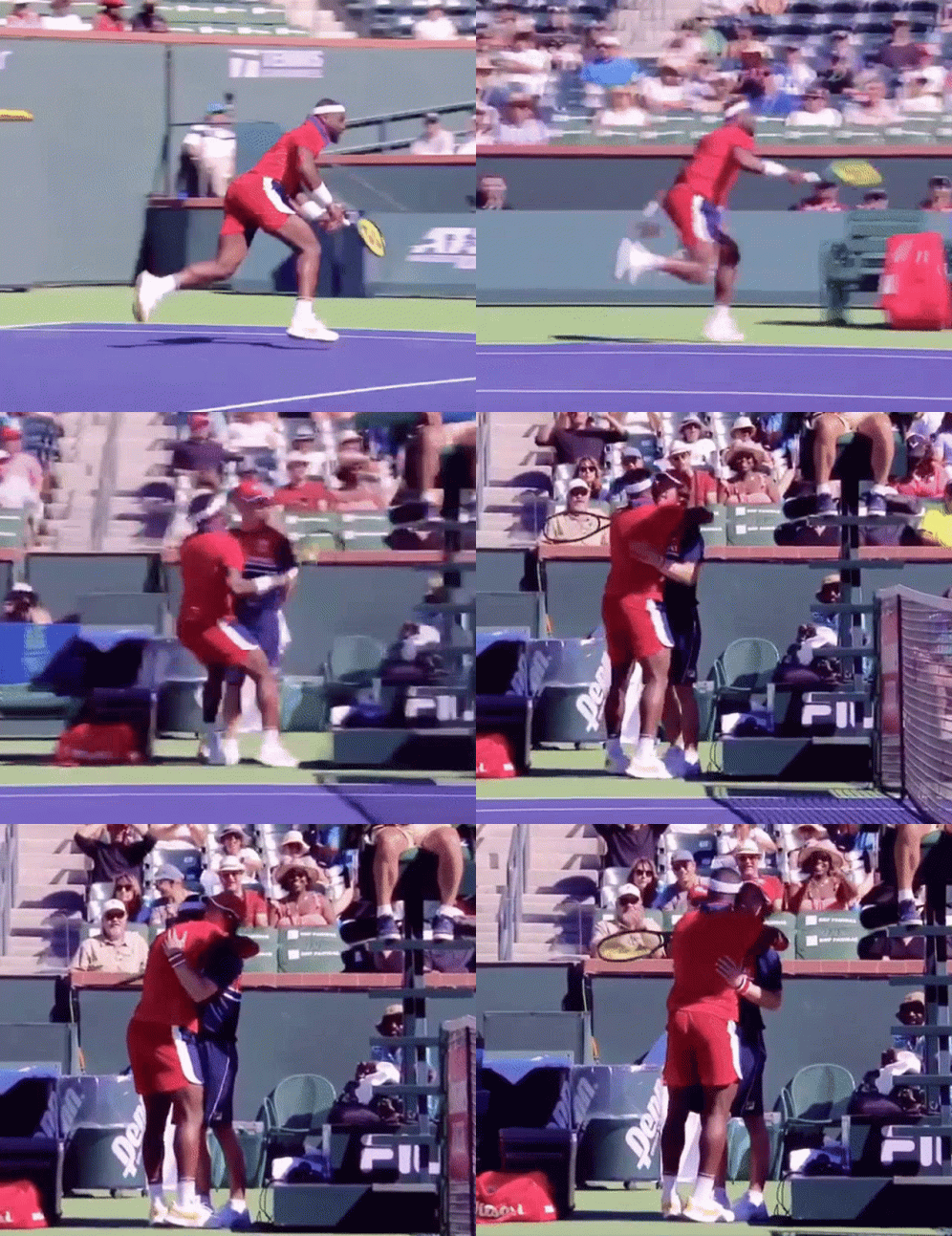
I’ve knelt on center court, sprinted the net, and fed more balls to players than I can count. I’ve survived back-to-back tiebreakers, held umbrellas during sudden downpours, watched racquets get obliterated in spectacular fashion, and, of course, made my fair share of mistakes.
But beneath the flurry of tasks, I came to an unexpected realization: being a ballkid at its core is an exercise in high-stakes problem-solving. The best ballkids do far more than support the players. They tune themselves to the rhythm of the match, track every movement on court, anticipate needs before they surface, and make swift decisions with composed precision. When it works well, no one notices. When it doesn’t, everyone does.
This piece is my attempt to share the insights, surprises, and small triumphs from my rookie season on the ball crew.
Let’s start at Level 0.
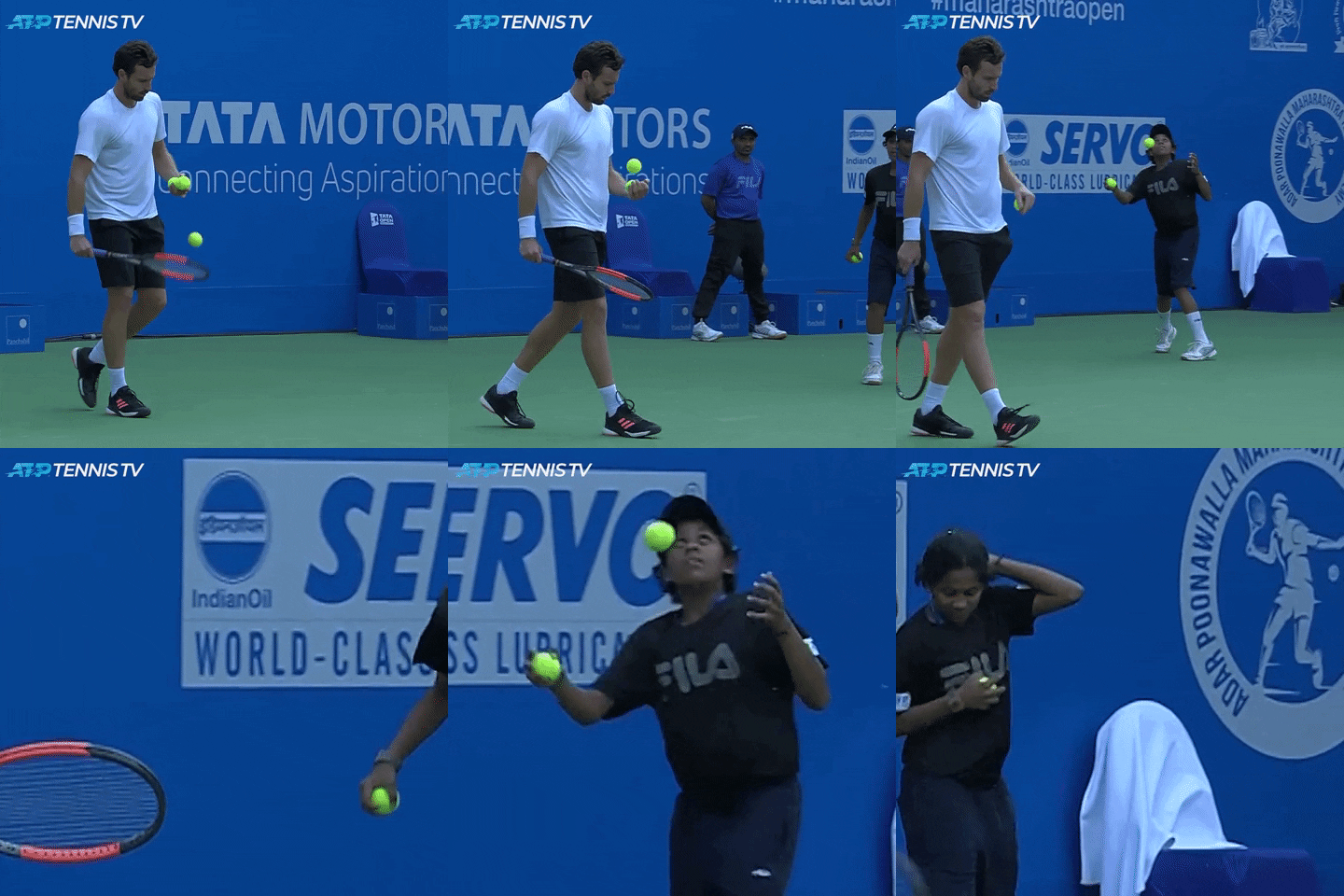
Level 0: Don’t Drop the Ball
Literally and figuratively.
This is the foundation drilled into you at training. Know your position and everyone else’s. Track every ball on court, even the rogue ones that vanish into the stands. During play, you hold them like they’re part of you.
You’re nervous, palms sweaty, arms are heavy, mom’s spaghetti 🍝. You catch yourself holding two balls in each hand (you shouldn’t). Or worse, you’re juggling them in your hand during play (you definitely shouldn’t).
Now picture this: a player winds up to serve, racquet drawn back, the crowd holding its breath. A potential 150 mph ace is seconds away. And then it happens. A ball slips from your hand.
Bounce.
Bounce.
The sound echoes across the court. The player hears it. They always do.
Just like that, focus shatters. Rhythm falters. Maybe even the point.
That’s what’s at stake. That’s why Level 0 matters.
Level 1: Anticipate the Players
This isn’t just about feeding balls with speed and precision, shading players with umbrellas, or fetching water on cue. Real service begins with attention.
Every player has micro-preferences: how many balls they hold before serving, which side they want them from, and whether they towel off after each point. When they do, you step in, drop the balls onto their racquet, and step away. With strict serve clocks, you cannot be the reason they’re late.
The rhythm shifts again in doubles. Some pairs gather balls before talking strategy. Others dive right in. Some use the entire break. Others rush right back to the line. Learning those rhythms lets you stay one step ahead. When you are already where they need you, the match flows.
Service also means protecting the court. At Indian Wells, desert winds send leaves and debris skimming across the surface. During one match, I spotted a drifting leaf. The moment the point ended, I sprinted to clear it. A small action, but one that could have caused a distraction or a slip.
To serve well is to anticipate what others have not yet noticed.
Level 2: Move As a Team
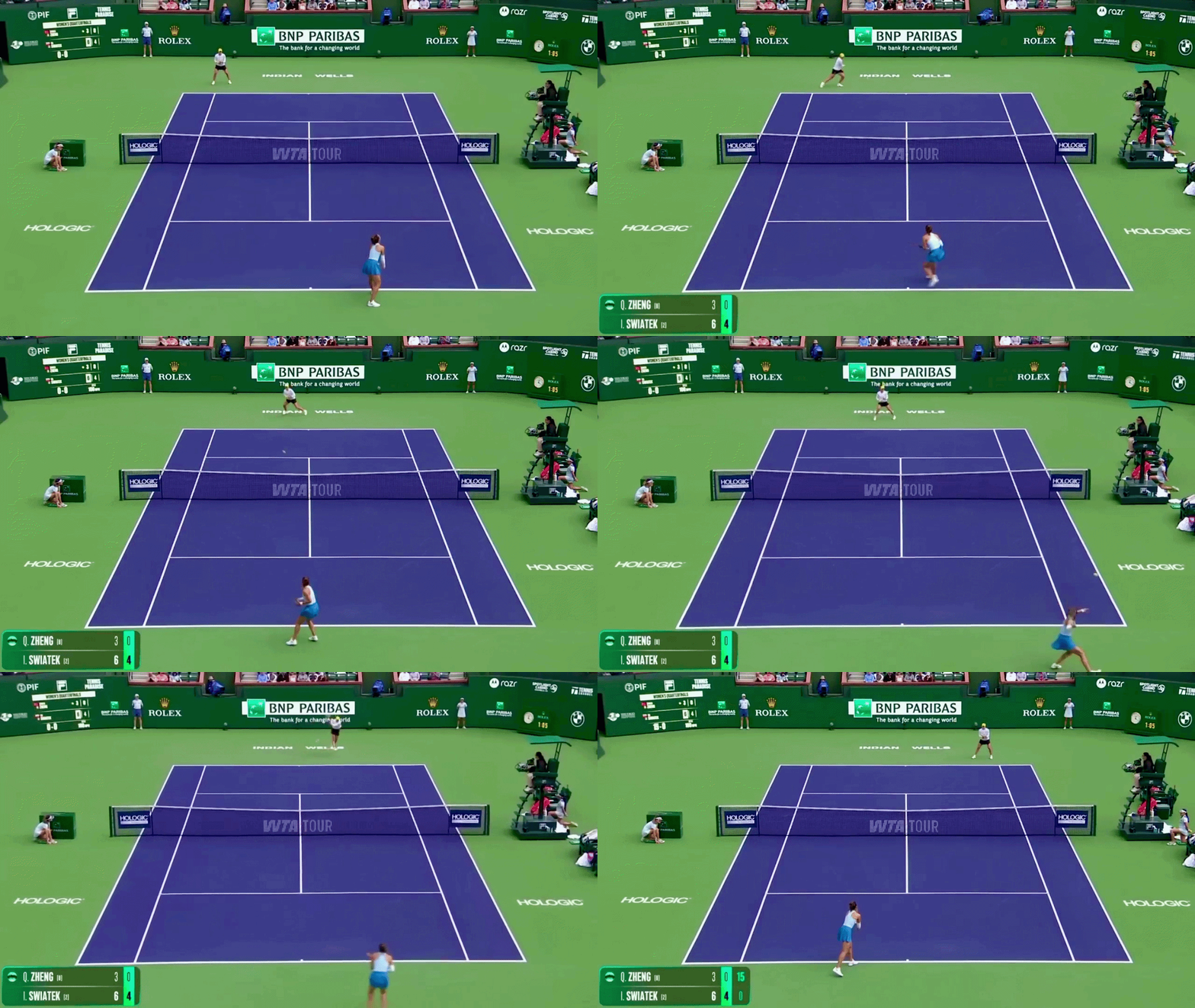
There’s a reason ballkids are grouped into three pairs. Every position has a partner. Nets and backs sync to collect, relay, and distribute balls with precision. You’re not just doing your job, you’re enabling others to do theirs.
This runs on unspoken trust. You read body language, pick up cues, and act without being asked. If your partner’s tied up, you step in. If they missed something, you cover. No blame, no ego. It’s about keeping the game moving.
It also means looking out for each other. Notice something about a player’s preference? Share it. Spot a smoother way to run a sequence? Bring it up during break. The crew improves when we learn from each other. Tennis rules are oddly specific, and every umpire has their own quirks too.
You might step on court as strangers, but when the group clicks, you leave moving as one.
Level 3: Master the Tiebreak
There’s no time to hesitate when the score hits 6–6. Pressure spikes, the crowd leans forward, and every point counts. A tiebreak is the ultimate test: fast, relentless, high stakes. For fans, it’s a show-stopper, pure adrenaline and drama compressed into a few minutes. For ballkids, you must know the rules cold and stay one step ahead of everyone.
Tiebreaks are deceptively complex. In singles, serves alternate in a precise sequence after the first point. In doubles, each pair rotates serving while switching sides. You must track who serves when and from which end. One misstep, one hesitation, and the rhythm of the match can unravel.
This is where the Nets become critical and the crew must be fully dialed in. Balls need to be on the correct side, side switches executed flawlessly, and serve order tracked without hesitation. All this unfolds amid the tension and absolute drama of the never-ending deuces.
After the tiebreak, the player fist pumps and the crowd erupts. For a moment, time feels frozen.
But not for you.
You’re already setting up the next game. Because of course, you remembered how the tiebreaker started… right? 😉
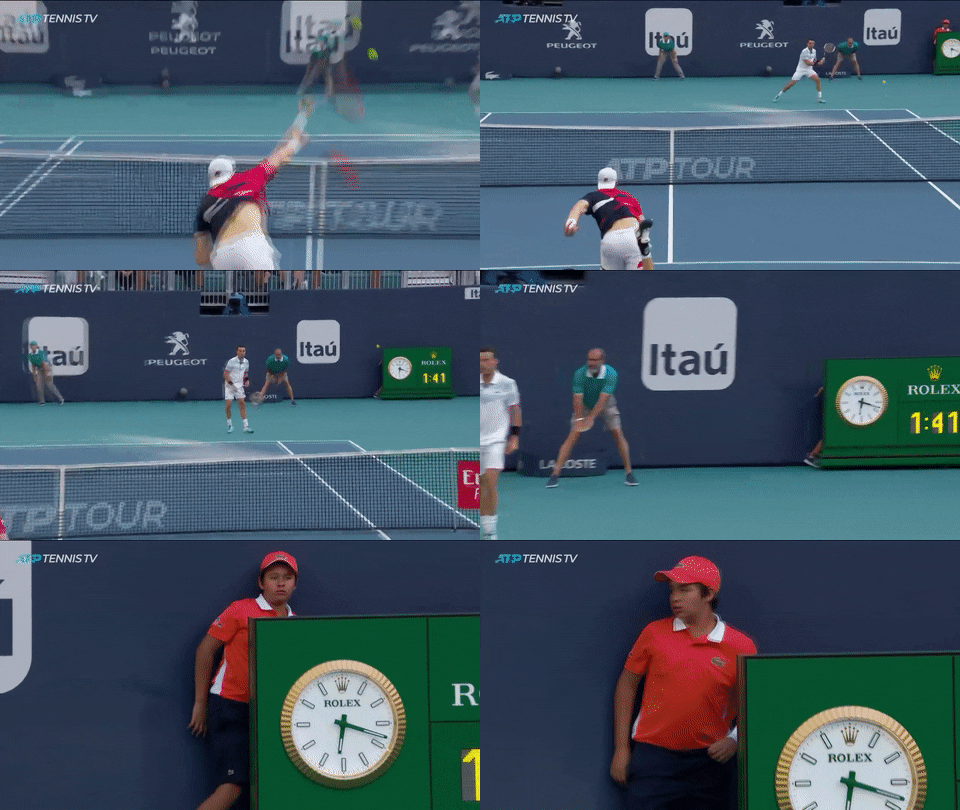
Level 4: Become Invisible
The ultimate flex. Move with purpose, stay out of frame, and blend into the match like you were never there, while being everywhere you need to be.
Before you clicked into this article, you probably didn’t notice those ballkids at all on TV or in person, unless one spectacularly messed up. And that’s exactly the point.
Be invisible until the moment you are indispensable.
Level 5: Stay Humble
As an adult, I assumed I’d have the edge—more tennis watched, more composure under pressure—but that’s a dangerous mindset.
I’ve been humbled repeatedly by teenage ballcrew veterans who move like clockwork. Stepping onto a tennis court in this role is entering a new domain—you’re a student again. You have to stay open to feedback, quick to adjust, and eager to learn.
I appreciate ballcrew coordinators who run retrospectives after each shift (my tech and tennis worlds are colliding and I’m loving it). We break down what worked, what didn’t, and how to improve as a team. Court supervisors, umpires, and other volunteers all have insights worth absorbing.
At the end of the day, this isn’t just a game. For players, it’s their livelihood. For fans, it’s devotion. For ballcrew, it’s keeping the match flowing so players can do what they came to do: break records, make history. All from the best view on court, with the minor hazard of being graced by Ben Shelton’s serves.
Looking back, every moment on court felt like a tiny operational puzzle: where the balls should go, when a player needed space, how the crew should move without speaking. Being a ballkid isn’t just about speed or precision—it’s about solving dozens of small problems every minute, quietly, quickly, and without anyone noticing. And I savored every second of it.
I’m officially spoiled. Once you’ve stood behind the baseline and watched a 135-mph serve rocket toward you, tennis from the stands feels like a distant memory. For a split second, every muscle in your body braces for impact. Then a forehand cracks the ball back across the net and you exhale. The player saves the point—and you avoid a tennis-ball-shaped bruise. Once you’ve experienced tennis from that close, there’s nowhere else you’d rather be.
Soaking in the thrill of raw athleticism is unbeatable, but being a ballkid is far more demanding than it looks. I’m hardly here to offer a masterclass, but I’ll give myself credit for making it to center court during a semi-final in my first year—a rare feat. And boy, was it terrifying, exhilarating, and everything in between. Life bucket list: checked ✅.
If you’re part of a ballcrew—or thinking about joining one—please share this article with your crew. I’d love to hear your perspective from the court.
For now, let’s get back to enjoying Tennis in Paradise! 🌴🎾😎
P.S. A quick note about the BNP Paribas Open. My experience at the Indian Wells Tennis Garden—both as a volunteer and as a patron—has been wonderful.
The practice courts feel intimate, there are dedicated areas where fans can watch players train and relax, the food options are excellent, and of course there’s no shortage of sponsor freebies. The stadium experience is phenomenal too. With three stadium courts and great sightlines, it’s easy to catch world-class tennis all day long.
If you’re planning to stay for both the day and night sessions, come prepared: bring sun protection and a jacket for the evening. The desert temperature swings are real—unless, of course, you’re friends with Mr. Ellison… then you will get blankets and seats next to BillG.
If you found this piece amusing in anyway, I’d love it if you could share it with a friend or on social media - this will help my newsletter a lot :)

What’s coming to your inbox
What it feels like to break 60 mph down a double black
The one thing that made me choose Apple Podcast over Spotify
Where to find me
👩💻 Twitter: @fionnagan
👩🍳 YouTube: Fionna Gan
👩🎤 Instagram: @fionna.gan
👩🎓 LinkedIn: Fionna Gan
🤹♀️ Newsletter: The Creative Outlet
👩🚀 Voice: The Creative Outlet